

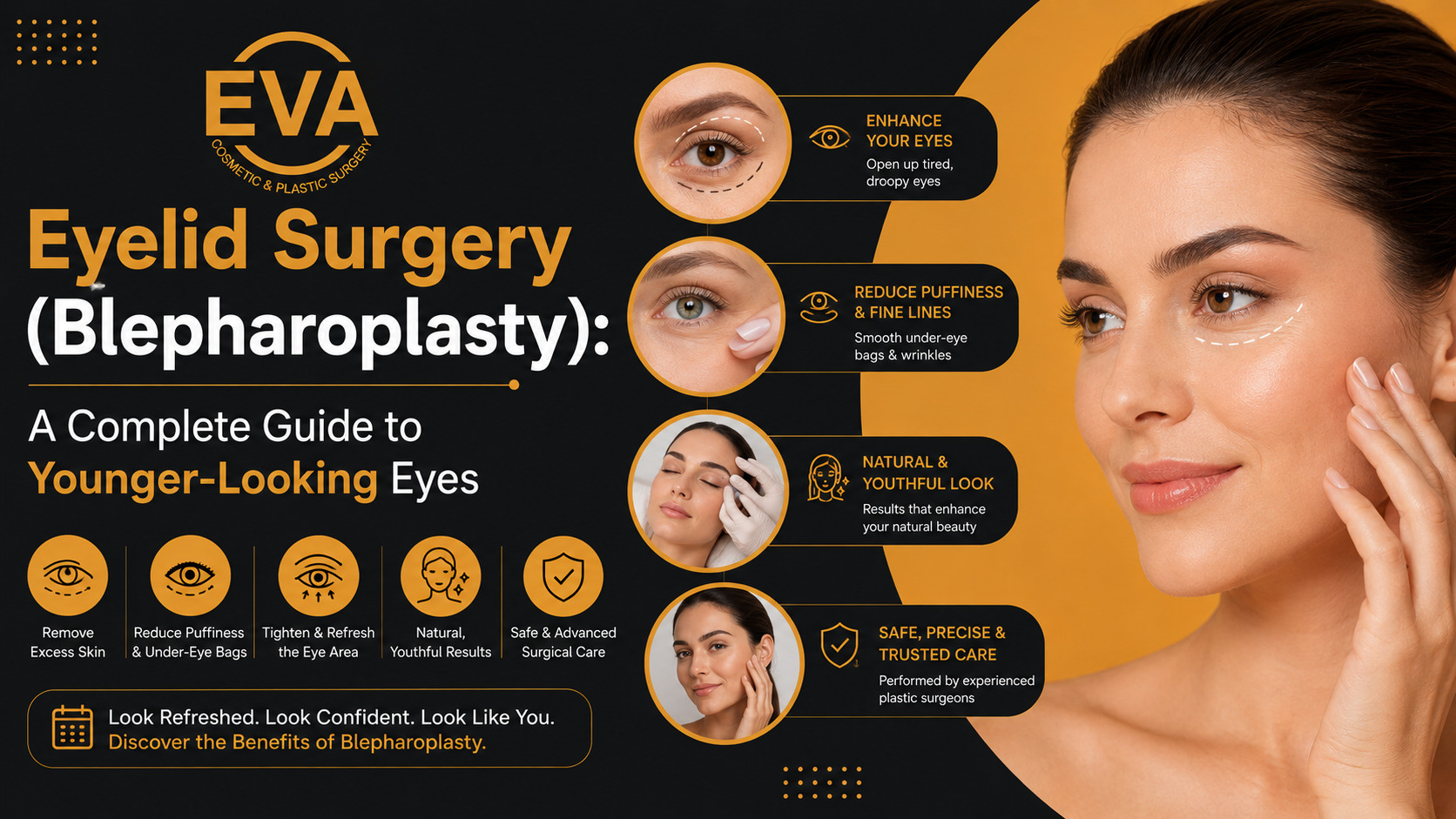

The eyes are often considered the most expressive feature of the face. However, as we age, the delicate skin around the eyes gradually loses elasticity, leading to drooping upper eyelids, under-eye bags, and a tired or aged appearance. For some individuals, excess eyelid skin may even interfere with vision. Fortunately, Eyelid Surgery in Delhi, also known as blepharoplasty, offers an effective solution to restore a youthful, refreshed look while improving eye function in appropriate cases.
Blepharoplasty is one of the most commonly performed facial cosmetic procedures worldwide because it combines aesthetic enhancement with functional benefits. Whether your goal is to eliminate puffy under-eye bags, tighten sagging upper eyelids, or achieve a more alert appearance, understanding the procedure is the first step toward making an informed decision.
What Is Eyelid Surgery (Blepharoplasty)?
Blepharoplasty is a surgical procedure designed to remove excess skin, fat, and sometimes muscle from the upper or lower eyelids. The surgery helps rejuvenate the eye area by correcting age-related changes that make a person appear tired, older, or less energetic than they actually feel.
Depending on the patient’s concerns, the procedure may involve:
-
Upper eyelid surgery
-
Lower eyelid surgery
-
Combined upper and lower blepharoplasty
For many patients seeking Upper Eyelid Surgery in Delhi, the procedure not only improves appearance but also restores a clearer field of vision when excess skin obstructs the upper visual field.
Why Do Eyelids Age?
The skin around the eyes is among the thinnest on the body. Over time, natural aging causes collagen and elastin levels to decrease, resulting in:
-
Loose or sagging upper eyelids
-
Puffiness caused by protruding fat pads
-
Wrinkles and fine lines
-
Under-eye bags
-
Drooping eyelids that create a constantly tired appearance
Genetics, sun exposure, smoking, and lifestyle habits can accelerate these changes.
Who Is a Good Candidate for Eyelid Surgery?
Blepharoplasty may be suitable for adults who experience:
-
Excess skin on the upper eyelids
-
Puffy eyelids due to fat deposits
-
Persistent under-eye bags
-
Drooping eyelids affecting facial appearance
-
Vision obstruction caused by sagging upper eyelids
-
Good overall health with realistic expectations
A thorough consultation with an experienced plastic surgeon is essential to determine whether eyelid surgery is the right option for your individual needs.
Types of Eyelid Surgery
Upper Eyelid Surgery
Upper Eyelid Surgery in Delhi is performed to remove excess skin and reposition or remove fat from the upper eyelids. This procedure is particularly beneficial for individuals whose eyelids have become heavy due to aging.
Benefits include:
-
Brighter, more youthful eyes
-
Improved eyelid contour
-
Better peripheral vision in selected patients
-
Reduced heaviness around the eyes
Lower Eyelid Surgery
Lower blepharoplasty addresses under-eye bags, loose skin, and puffiness caused by fat herniation. Depending on the patient’s anatomy, fat may be repositioned rather than removed to achieve smoother, natural-looking results.
Combined Blepharoplasty
Some patients benefit from correcting both the upper and lower eyelids during the same procedure, providing comprehensive facial rejuvenation with balanced, harmonious results.
How Is the Procedure Performed?
Blepharoplasty is usually performed under local anesthesia with sedation or general anesthesia, depending on the complexity of the procedure.
During surgery:
-
Precise markings are made before the operation.
-
Incisions are placed within the natural eyelid creases whenever possible.
-
Excess skin, muscle, and fat are carefully removed or repositioned.
-
Fine sutures are used to close the incisions.
The operation generally takes between one and three hours, depending on whether one or both eyelids are being treated.
One of the advantages of modern blepharoplasty techniques is that scars are typically well concealed within the natural folds of the eyelids and become less noticeable over time.
Recovery After Eyelid Surgery
Recovery from eyelid surgery is generally straightforward when patients follow their surgeon’s instructions.
During the first few days, it is normal to experience:
-
Mild swelling
-
Bruising
-
Temporary tightness
-
Slight watering of the eyes
Most patients can return to light daily activities within one week, although strenuous exercise should be avoided until cleared by the surgeon.
To support healing, patients are usually advised to:
-
Use cold compresses during the initial recovery period.
-
Keep the head elevated while resting.
-
Avoid rubbing the eyes.
-
Wear sunglasses outdoors.
-
Follow all prescribed medications and follow-up appointments.
With proper care, swelling gradually subsides, revealing a fresher and more youthful appearance over the following weeks.